

Tina spends a lot of time working with seniors. As the director of the Westfield Council on Aging, Tina helps older adults maximize their independence by providing services and programs that facilitate self-reliance, enhance socialization, and promote all aspects of healthy, valued, and creative aging. Sometimes, the best way to do that is to move into assisted living, Tina says. Her sister-in-law recently transitioned to assisted living at The Arbors at Westfield, and since she’s moved in, she’s become happier and more engaged. “Now when I visit with her, she’s much more talkative,” Tina says. “We’re laughing together again.” Tina works with a lot of seniors and their families who put off the move to assisted living, though. “It isn’t because they can’t afford it,” she says. “They feel like they’re not ready yet. My advice is don’t wait. Do it sooner rather than later, and then enjoy what assisted living has to offer. I’m glad that we recognized that.”
Why planning for long-term care sooner is so important
According to the Administration for Community Living, someone turning age 65 today has almost a 70% chance of needing some type of long-term care services during their lifetime. Women tend to need care longer than men, and about two-thirds of people receive some care at home. A portion will need support for more than five years.
Waiting until a crisis to make decisions about long-term care can limit choices. Early planning gives families time to compare care settings, understand long-term care services, and budget for costs. It also gives older adults a chance to share preferences about daily living, personal care, and health services before an urgent event forces quick action. Touring assisted living communities early, when everyone has energy to ask questions, often reduces stress later.
What long-term care includes
Long-term care refers to a range of long-term care services and supports that help with activities of daily living, such as bathing, dressing, eating, toileting, and transferring, as well as everyday tasks like managing medications and cooking. Services can be delivered in several care settings:
- Assisted living communities and other residential care facilities that provide housing, meals, assistance with daily activities, social programs, and therapeutic services.
- Skilled nursing care in a skilled nursing center or nursing home for people who need 24-hour medical care and rehabilitation.
- Home services, such as a home health aide or in-home care
The World Health Organization notes that populations are aging globally, life expectancy is rising, and many people will live with chronic diseases and chronic conditions as they age. Planning for long-term care is a worldwide priority.
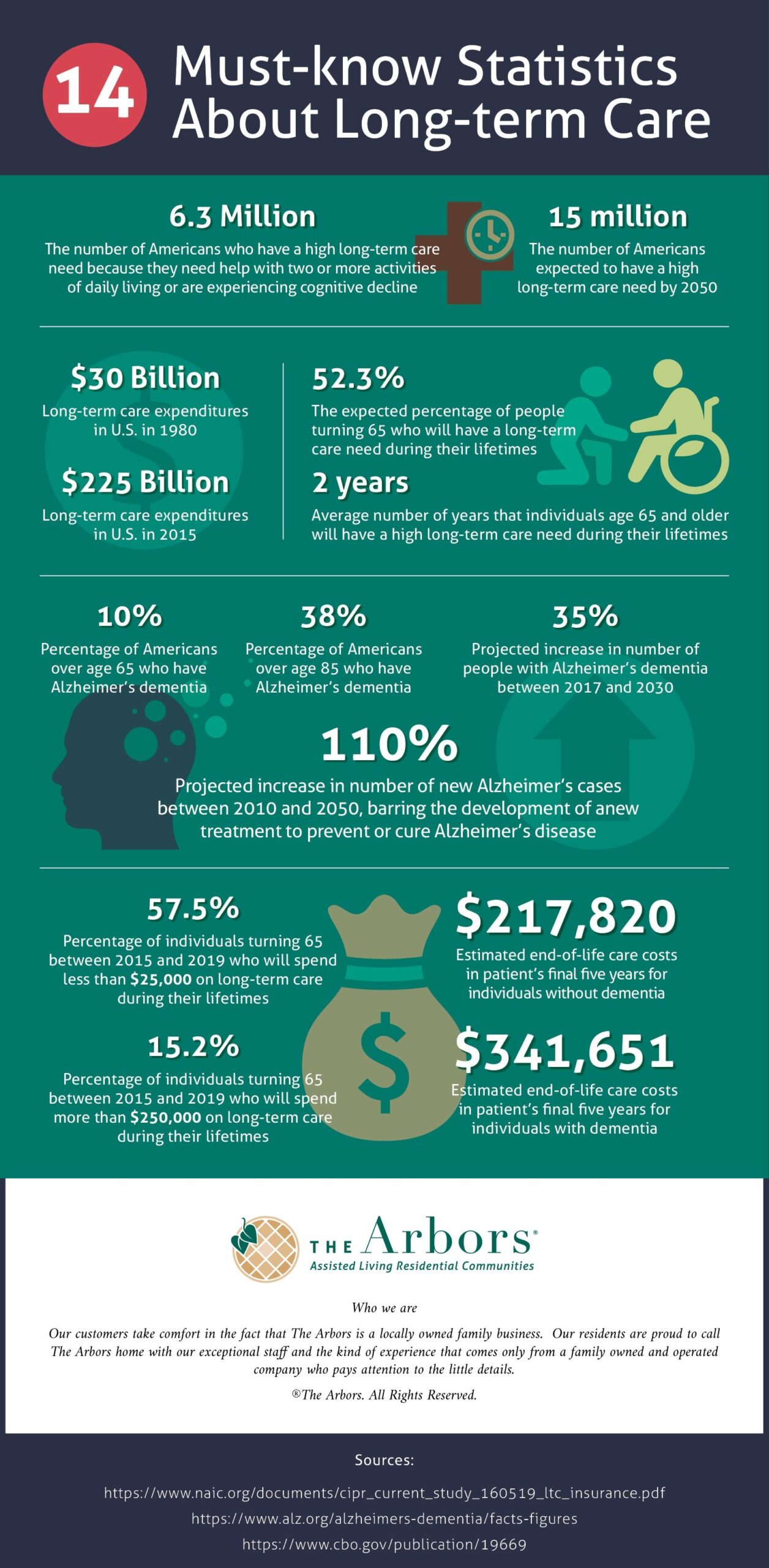
Long-term care statistics you need to know
Assisted living versus in-home care: how to compare
Both options can offer care; they just support different needs.
- In-home care: A home health aide can help with personal care, mobility, and safety in a person’s own homes. Home health can be paired with community-based services like adult day programs to maintain routines and social connection. Some families choose home care first, then transition to assisted living communities if needs increase.
- Assisted living: Assisted living communities provide personal care, meals, activities, transportation, and on-site staff. Many residents appreciate the balance of independence with help for daily living, along with friends next door. For those who later need skilled nursing care, a nursing home may be the right next step.
The CDC’s 2022 health statistics show that residential care communities served more than 1 million residents and most residents need help with bathing and several daily activities.
Learn more about assisted living vs. home care vs. home health.
Understanding costs, coverage, and the financial burden
Costs vary by location, services, and level of support. Families generally pay in several ways:
- Private pay: Using savings, pensions, or retirement income
- Long-term care insurance: LTC insurance can help pay for assisted living services, home care with a home health aide, or a nursing home, depending on the policy. Review coverage limits, waiting periods, and inflation protection.
- Public programs that may cover specific long-term care services in certain care settings if eligibility is met. Learn more about using veterans benefits to cover care costs.
The median cost for services differs by setting. Ask each provider for a clear breakdown of what their fees cover, what is optional, and how rate changes are handled. The financial burden can rise when care needs increase. Build a cushion for added assistance, specialized memory support for dementia, or short-term rehabilitation after a hospitalization.
Signs it may be time to explore assisted living communities
If you notice several of the following over the course of a month, it can help to schedule tours and start conversations:
- Increased falls, near falls, or worries about walking safely
- Changes in bathing, dressing, or toileting that put safety at risk
- Missed medications or difficulty managing refills and doses
- Weight loss, spoiled food in the fridge, or missed meals
- Isolation from friends, less interest in activities, or depressed mood
- Caregiver stress among families who are juggling work and care
Early steps do not commit you to a move. They simply give you more long-term options and reduce pressure if needs change quickly.
Expert long-term care at The Arbors and The Ivy
The Arbors and The Ivy assisted living communities welcome older adults who want a maintenance-free lifestyle with daily activities, personal care, and a friendly community. Our team can help you compare assisted living services with other care settings and coordinate with your physician and any home health professionals. To see what life could look like, please explore our senior living options and review answers to common questions in our Senior Assisted Living FAQs.
When family members are proactive in creating a long-term plan for their senior loved ones, they set themselves up for success for when the senior requires additional care. Early planning could potentially improve a family caregiver’s social and physical well-being as well as their relationship with their senior loved ones. To read more about Tina’s experience after she helped her sister-in-law transition to assisted living at the Arbors, download our eBook “How Moving My Loved One to The Arbors Eliminated My Caregiving Challenges”.
You can also browse our Educational Guides for Family Members or visit our resources hub for planning tools.
FAQs about long-term care
What percentage of Americans need long-term care?
The Administration for Community Living reports that almost 70% of people who turn age 65 will need some type of long-term care services during their lifetime, and a portion will require help for longer than five years. Many will receive care at home, and some will use assisted living or a nursing home at different times.
How many Americans are in long-term care facilities?
CDC data show that residential care facilities and assisted living communities served more than 1 million residents in 2022. (This does not include nursing home residents, who represent a different group with higher medical needs.) Some people use facilities for short periods, while others stay longer.
What is the main goal of long-term care?
The main goal is to support people with daily living, safety, and quality of life. Long-term care services help individuals continue to do the things they value, from personal care to social connection, while coordinating health care for chronic diseases like heart disease or Alzheimer’s disease.
What is the downside of LTC?
Potential downsides include costs, navigating coverage, and the emotional impact of change. Planning early, comparing the median cost in each setting, and reviewing coverage can lower risks and help pay for care over a lifetime.